
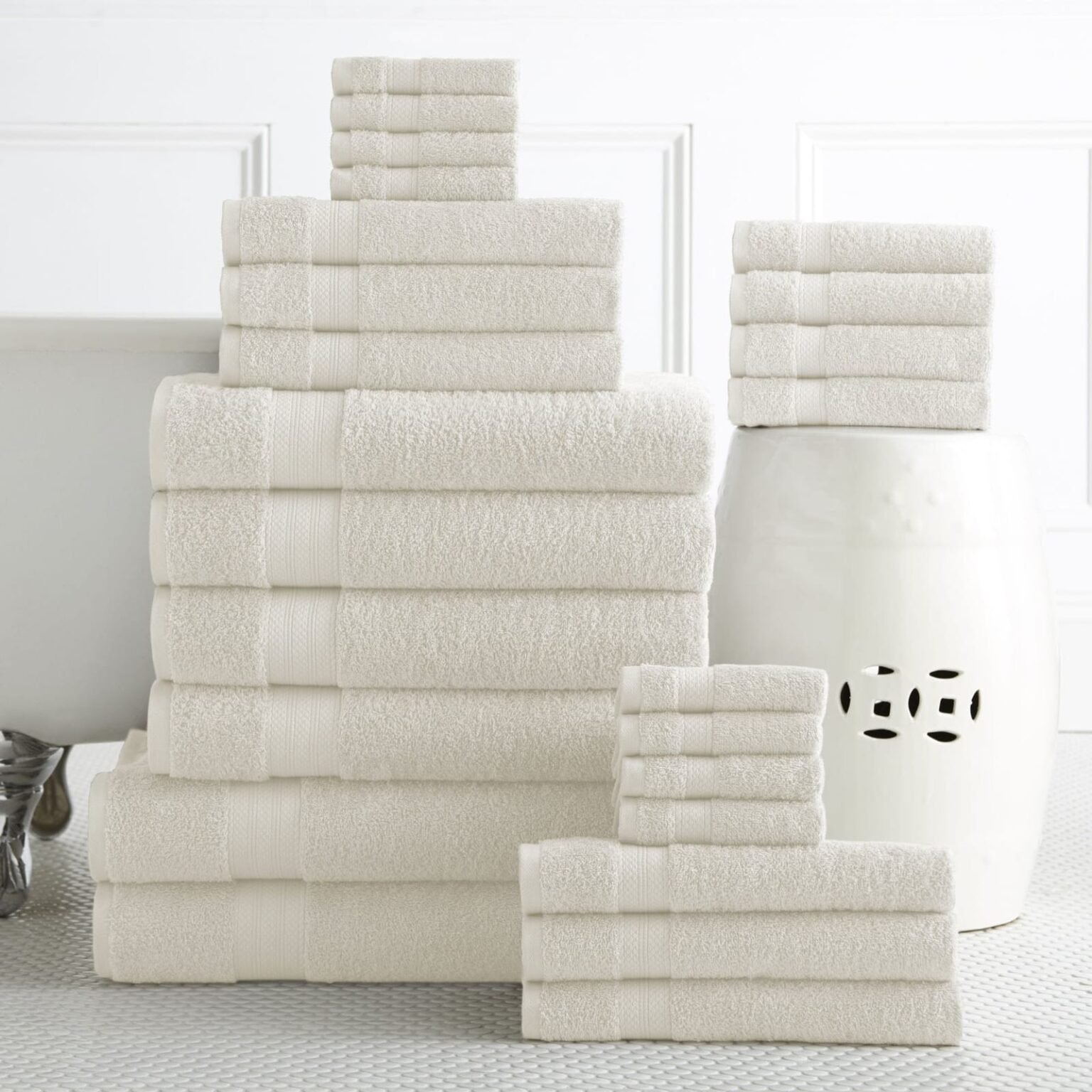
Whether supplying a five-star luxury resort or curating a premium home linen collection, the terry towel is the undisputed cornerstone of the bath experience. But what exactly makes this specific fabric the global standard for moisture absorption?
Understanding the engineering behind terry cloth—and the distinct varieties available on the market—is essential for making informed sourcing and purchasing decisions.
What is a Terry Towel?
At its core, a terry towel is a textile specifically engineered to absorb large amounts of water while remaining soft against the skin.
Traditional woven fabrics are made by interlacing two sets of yarn: the warp (lengthwise) and the weft (crosswise). Terry weaving introduces a crucial third element: the pile warp. During the weaving process, this extra set of yarn is left intentionally uncut, forming thousands of tiny, protruding loops across one or both sides of the fabric base.
These loops act like thousands of microscopic sponges. By significantly increasing the surface area of the fabric, the loops draw in and trap moisture rapidly. The longer and denser the loops, the more absorbent and plush the towel feels.
Exploring Terry Towel Specifications
When evaluating terry towels, buyers look at GSM (Grams per Square Meter), material, and weave style. Understanding how these different attributes combine helps to create the ideal towel for specific environments—from luxury hospitality to everyday utility.
Key insight: Higher GSM doesn’t always mean “better” for every situation. While an 800 GSM Egyptian cotton towel offers ultimate luxury, a 400 GSM Turkish cotton towel is vastly superior for humid environments where rapid drying is a priority.
Types of Terry Towels by Material
The yarn used to weave the loops dictates the towel’s performance, longevity, and hand-feel.
- Egyptian Cotton: The gold standard for luxury. Grown in the nutrient-rich climate of the Nile River Valley, its extra-long staple fibers create a towel that is incredibly dense, highly absorbent, and resistant to pilling.
- Turkish Cotton: Known for the perfect balance of absorbency and drying speed. Turkish cotton has slightly shorter fibers than Egyptian cotton, meaning it absorbs water efficiently but releases it quickly, preventing mildew in damp environments.
- Bamboo Blends: Often blended with cotton, bamboo viscose creates a fabric with a silken texture and natural antibacterial properties. It is highly sustainable and exceptionally soft.
- Microfiber: A synthetic option woven in a terry style. While not traditional cotton, microfiber terry is ultra-absorbent, lightweight, and highly durable, making it ideal for commercial cleaning, automotive care, and gym use.
Types of Terry Towels by Usage
To curate a complete linen collection, standard sizing and categorizations must be followed. Here is a breakdown of standard terry towel formats:
| Towel Type | Standard Dimensions | Primary Function | Ideal GSM Range |
| Washcloth / Face Towel | 12″ x 12″ | Facial cleansing and targeted hygiene. Requires a soft, non-abrasive pile. | 400 – 600 GSM |
| Hand Towel | 16″ x 30″ | Drying hands at the vanity. Needs high durability for frequent washing. | 450 – 700 GSM |
| Bath Towel | 27″ x 52″ | The standard post-shower wrap. Balances surface area with manageable weight. | 500 – 800 GSM |
| Bath Sheet | 35″ x 60″ | An oversized bath towel designed for maximum coverage and luxury wrapping. | 600 – 900+ GSM |
| Bath Mat | 20″ x 30″ | Placed outside the shower to absorb dripping water. Woven with a tightly packed, highly durable pile. | 700 – 1000 GSM |
Whether you are seeking the rapid-dry efficiency of ringspun Turkish cotton or the opulent weight of combed Egyptian yarns, understanding the architecture of a terry towel ensures that your linens deliver exactly what your clientele expects: uncompromising quality, durability, and comfort.